


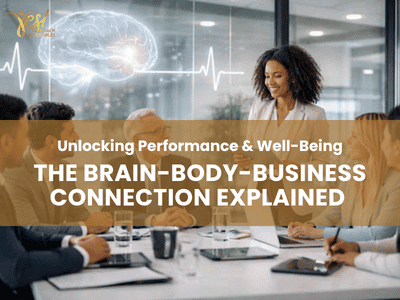
The Brain-Body-Business Connection Explained: Unlocking Performance and Well-Being
Introducing our New Deep Sleep Reset System in Mighty Network
✨ We are officially launching Our Brand New Mighty Networks Community!

You deserve restful sleep and restored energy. Come reset with us inside our new Mighty Network Space.
Reset your sleep with support, structure, and exclusive resources — join our New Mighty Network Space now!
No more tired mornings. No more wired nights. Let’s fix your sleep together! Join the Challenge inside the group and have the benefits of more resources to support your deep sleep.
———————————————————————————————————————————————————————————————
You can boost team performance and personal impact by aligning how your brain works with how your body feels and how your business runs. When you manage stress, sleep, movement, and focus together, you make better decisions, stay productive longer, and lead with more clarity.
This connection affects your energy, thinking, and how others respond to you. Small daily choices, like short breathing breaks, better sleep, or clear routines, change how you perform at work and how your team performs under pressure.
 Credit: Deposit Photos
Key Takeaways
- Combine mental focus and physical habits to improve work outcomes.
- Simple daily practices reduce stress and sharpen decision-making.
- Leading with well-being raises team productivity and resilience.
“To know your pain’s origins is to take a giant step toward creating a life where nothing can stand in your way.”
Lisa Charles – Commit. Do. Live.
Understanding the Brain-Body-Business Connection
You will learn how your brain and body interact to shape decision-making, creativity, and team performance. The next parts explain what that looks like in business, the biological mechanisms involved, and how your mental and physical health affect measurable results.
 Credit: Deposit Photos
What the Brain-Body Connection Means in Business
You use both mind and body when you lead, sell, or create. Decision speed, emotional control, and stamina come from brain systems (attention, reward, stress) and body states (sleep, heart rate, posture). For example, poor sleep reduces attention and slows choices, which can cost time and money on projects.
Teams also respond to leaders’ body cues. Calm breathing and steady posture lower others’ stress and improve meeting focus. Small changes, short walks, stand-up meetings, and regular breaks shift physiology enough to raise sustained attention and reduce errors.
Practical steps you can apply: schedule 10–15 minute movement breaks, set meeting norms for device-free focus, and track sleep or stress with simple tools. These actions link directly to clearer thinking and steadier collaboration.
The Science Behind Mind-Body Interactions
Your nervous system constantly sends signals between the brain and the body. The vagus nerve and stress hormones like cortisol change how you think and feel. High cortisol narrows focus and biases you to threat-based choices, while balanced cortisol supports flexible thinking.
Body systems affect cognition through inflammation, gut signals, and cardiovascular state. For instance, poor diet and chronic inflammation can blunt motivation and memory. Regular aerobic activity improves blood flow and neuroplasticity, which helps learning and idea generation.
Research shows these links matter in work settings. Better sleep, balanced meals, and movement improve executive function and reduce impulsive decisions. You don’t need perfect habits; consistent, small improvements produce measurable boosts in reasoning and resilience.
How Cognitive and Physical Health Drive Results
Your attention, memory, and self-control directly shape productivity and customer outcomes. When you maintain cognitive health, you make fewer costly mistakes, complete tasks faster, and negotiate more effectively. Reduced mental fatigue also lowers turnover and burnout in teams.
Physical health supports cognitive capacity. Cardio fitness raises stamina for long workdays and improves recovery after stress. Simple metrics you can watch: sleep hours, resting heart rate, and weekly active minutes. Aim for steady trends rather than one-off peaks.
Use team-level practices to protect both areas: rotate demanding tasks, enforce meeting-free focus blocks, and provide options for standing workstations. These changes lower error rates, speed problem-solving, and keep your workforce functional under pressure.
Key Elements Linking Brain, Body, and Business Success
These elements show how your nervous system, emotions, and habits shape decision-making, communication, and performance. Apply specific practices to reduce stress, read emotions, recover after setbacks, and sharpen attention.
 Credit: Deposit Photos
Stress Management Strategies
Stress changes your thinking and slows recall. Use short, practical actions you can do at work: box-breathing for 60–90 seconds to lower heart rate, a two-minute body scan to release neck and shoulder tension, or a quick walk outside to reset cortisol levels. Schedule 10–15 minute breaks every 90 minutes to prevent overload and keep working memory available.
Set clear limits on after-hours email and put nonurgent tasks in a “later” list to stop rumination. Track one stress trigger for a week to find patterns you can change. If stress stays high, try guided breathing apps or brief movement routines before meetings to keep your nervous system regulated.
The Role of Emotional Intelligence
Emotional intelligence helps you read signals and respond, not react. Notice your body cues—tight jaw, shallow breath, or restlessness—to spot rising defensiveness before it harms a conversation. Practice labeling emotions aloud or in a private note (e.g., “I feel frustrated and tired”) to reduce intensity and regain control.
Use active listening: restate the other person’s point in one sentence, ask one clarifying question, then share your view. This structure lowers miscommunication and builds trust. Build emotional vocabulary and weekly check-ins with team members to keep small problems from growing into crises.
Building Resilience at Work
Resilience is how quickly you recover and learn from setbacks. Build routines that support recovery: consistent sleep, brief daily movement, and a single end-of-day ritual to mark work’s end. After a setback, take 10 minutes to list what went wrong, what you learned, and one small next step. That turns stress into a plan.
Create social backups: identify two colleagues you can call for quick advice and one mentor for bigger challenges. Practice micro-goals—break big projects into 30–60 minute tasks—to keep progress visible. Track improvements weekly so you can see growth and stay motivated.
Improving Focus and Clarity
Focus depends on both body state and environment. Control your workspace: reduce visual clutter, use noise-cancelling headphones, and block two 60–90 minute focus periods on your calendar when you do your highest-value work. During those periods, remove phone notifications and place a visible “Do Not Disturb” note.
Train attention with short exercises: a five-minute single-task practice (timer set, no multitasking) or a daily 10-minute mindfulness session to strengthen top-down control. Fuel clarity with consistent meals and hydration; low blood sugar and dehydration make decision-making slower and less accurate. Use quick physical resets—stand and stretch for 90 seconds—when you feel foggy.
Leadership and the Well-Being Equation
Leaders shape daily practices that affect focus, energy, and morale. Small changes in routines, role design, and feedback loops produce measurable shifts in team resilience and performance.
 Credit: Deposit Photos
Self-Leadership for Sustainable Performance
You must manage your energy, not just your calendar. Block daily focus time, schedule short recovery breaks, and set clear boundaries for after-hours communication. These habits protect your prefrontal cortex from overload and reduce decision fatigue.
Use a simple weekly check-in ritual. Rate your sleep, stress, and focus on a 1–5 scale, then pick one micro-change to test (example: three 10-minute walks). Track results for two weeks and adjust. This makes improvement concrete and low-risk.
Practice emotional naming when stress rises: pause, label the feeling, and choose one action (breathe, step away, delegate). That quick step lowers reactivity and helps you stay strategic in meetings.
Creating a Well-Being Driven Culture
You create culture through the choices you model and the systems you set. Require meeting agendas, set “no meeting” blocks, and limit meeting length. These policies reduce cognitive load across the team.
Use these practical actions:
- Formalize flexible work hours tied to core overlap times.
- Protect vacation with automatic calendar blocks.
- Train managers to run brief weekly check-ins focused on workload, not just tasks.
Measure impact with simple metrics: meeting hours per person, average uninterrupted focus time, and voluntary attrition. Share results quarterly so teams see progress and trust the effort.
Empowering Teams Through Wellness
Give teams tools and authority to manage their collective workload. Let teams decide meeting cadences, rotate facilitator roles, and set shared norms for response time on chat. This decreases hidden overtime and clarifies expectations.
Provide targeted training for psychological safety and emotional regulation. Short workshops on active listening and feedback reduce misunderstandings and speed recovery from setbacks.
Use a compact dashboard for team health:
- Workload balance (task hours vs. capacity)
- Focus time retained (hours/week)
- Quick pulse (one-question mood check)
Review the dashboard in retro meetings and act on one pattern each month. When teams see concrete changes, they take ownership and sustain better performance.
Corporate Wellness and Team Transformation
You will align wellness with business goals, design programs employees want, and measure results that matter to leaders. Focus on clear roles, practical activities, and simple metrics that show real change.
 Credit: Deposit Photos
Designing Effective Wellness Initiatives
Start by defining your primary business outcome, such as lowering absenteeism by X% or improving team engagement scores by Y points. Use employee surveys, focus groups, and HR metrics to find the top three needs: stress, sleep, or movement and target those first. Build a program with blended delivery: short live sessions, on-demand videos, and weekly team micro-challenges.
Assign clear roles: a wellness manager, an executive champion, and employee ambassadors. Budget for one vendor pilot and basic tracking tools. Keep activities simple and repeatable, for example: 10-minute guided breathing, a weekly walking hour, and monthly resilience coaching. Make access equitable, offer virtual and in-person options and materials in multiple languages if needed.
Encouraging Employee Engagement
You must make participation easy and rewarding. Use a mix of incentives and social proof: recognition in team meetings, small rewards for consistent participation, and visible leadership involvement. Launch with a two-week pilot in one department to iron out logistics and gather testimonials.
Create clear communication: one weekly email, a short intranet hub, and calendar blocks that managers protect. Offer choice, self-directed learning, small group sessions, and one-on-one coaching, so different personalities can join. Track participation by program, not only total logins, to see which activities move behavior. Use employee ambassadors to nudge peers and collect quick feedback after each activity.
Measuring Success and Outcomes
Pick 3–5 metrics that tie to your business goals. Examples: percentage change in sick days, team engagement survey scores, utilization of EAP/therapy, and employee retention in pilot groups. Set baselines before launch and measure at 3, 6, and 12 months.
Combine quantitative and qualitative data. Use simple dashboards for leaders showing trend lines and a short narrative about who benefited. Run A/B pilots where feasible to test incentives or formats. Share results in concise reports and one-slide summaries. Use findings to scale what works and stop what doesn’t.
Personal Strategies to Enhance the Brain-Body-Business Link
You can strengthen how your body and brain support work by noticing signals, building simple daily routines, and spotting early signs of stress. Small, concrete changes in attention, movement, and rest create steady gains in focus, mood, and performance.
Cultivating Self-Awareness
Start by tracking one clear internal signal for a week, such as sleep hours, midday energy, or tension in your shoulders. Use a short note each evening to record the pattern. This tells you when your brain works best and when your body needs a break.
Practice a two-minute check-in before important tasks. Close your eyes, scan for breath depth, jaw tightness, and heart rate. Label the feeling—“alert,” “tense,” or “drained.” Naming emotion lowers reactivity and helps you choose the right action.
Use that data to test one small change. If you notice low focus after lunch, try a 10-minute walk before returning to work. If you find recurring tension, schedule three 30-second shoulder-relax breaks hourly. Repeat what helps.
Building Daily Healthy Habits
Pick three daily habits: consistent sleep time, movement breaks, and a focused nutrition habit like a protein-rich breakfast. Keep each habit simple and trackable so you can stick to it.
Use a micro-routine to anchor habits. For example: wake, drink 250 ml of water, do five minutes of breathing, then review your top work task. This links body care to work output and reduces decision fatigue.
Schedule movement as you would a meeting. Block two 15-minute slots for walking or stretching mid-morning and mid-afternoon. Movement boosts idea flow and reduces mental fatigue, so treat it as core work time.
Overcoming Burnout in Professional Environments
Recognize burnout signs early: chronic exhaustion, cynicism about tasks, and persistent headaches or sleep loss. Log these symptoms for three days to confirm a pattern before acting.
Set immediate boundaries. Reduce meetings by one block a day and protect a 60-minute uninterrupted work window for deep tasks. Ask your manager for a temporary workload adjustment if symptoms persist.
Use short recovery practices at work: a five-minute breath reset, a 10-minute outdoor walk, or a single task switch to something less demanding. Combine these with weekly activities that restore you, social time, light exercise, or creative hobbies, to rebuild reserves.
Frequently Asked Questions
This section gives clear, practical answers about how brain function, stress, sleep, movement, and business metrics connect to real work outcomes. You will find specific actions, measures, and corrections to common mistakes that leaders and teams can apply.
How do brain function and nervous system regulation influence workplace decision-making and leadership performance?
When your prefrontal cortex is well-supported, you make better plans, weigh risks, and control impulses. Strong regulation of your autonomic nervous system—less reactive fight-or-flight and more steady calm, lets you think clearly under pressure.
You act with more patience and clarity when you use breath control, short breaks, and focused work blocks to reduce sympathetic overdrive. Leaders who practice these small routines show steadier judgment and clearer communication in meetings.
What role do stress physiology and recovery habits play in productivity, creativity, and sustained focus?
High, chronic stress raises cortisol and inflammation, which reduce working memory and creative problem solving. Regular recovery habits lower stress biomarkers and restore executive function.
You improve output and creative insight by scheduling predictable recovery: short naps, 10–20 minute breaks, and consistent post-work wind-downs. These habits preserve focus for longer work periods and help you shift to creative modes more easily.
How can businesses measure the impact of wellbeing initiatives on performance outcomes without relying on vanity metrics?
Track objective, tied-to-business indicators like error rates, sales per employee, time-to-decision, and absenteeism. Pair those with validated well-being measures such as sleep quality scores or stress symptom checklists, to link health to results.
Use randomized pilots or phased rollouts and compare matched teams over time. That gives causal evidence instead of just reporting app usage, satisfaction ratings, or attendance at a one-off event.
Which daily practices most effectively improve cognitive performance, energy stability, and emotional regulation at work?
Start the day with 20–30 minutes of moderate movement and light exposure to stabilize energy and circadian rhythm. Practice two focused attention sessions of 25–50 minutes with a short break between them to protect working memory.
Include brief breath-based regulation (one to five minutes) before high-stakes meetings and a consistent lunch with protein and fiber to avoid afternoon crashes. These habits support steady energy and clearer decisions all day.
How do sleep, nutrition, and movement affect executive function, communication, and strategic thinking in high-pressure roles?
Poor sleep shrinks attention span and reduces emotional control, which makes strategic choices riskier. Balanced meals and regular movement maintain blood sugar and mood, which keeps your reasoning clearer in long meetings.
When you prioritize 7–9 hours of sleep, protein-rich meals, and daily activity, you reduce reactive behavior and improve planning, listening, and persuasive communication in stressful situations.
What are the most common misconceptions about linking neuroscience and physiology to organizational results, and how can they be corrected?
People often assume quick fixes—one app or a single workshop- will change performance. Real change needs repeated, measurable practices tied to business goals and physiological markers.
Another myth is that neuroscience only applies to elites. In reality, small, consistent habits scale across roles and yield measurable gains. Correct this by testing simple interventions, measuring business outcomes, and iterating based on data.
What if the very thing stalling your business…
is the story you haven’t fully owned yet?
We explored how hesitation, lack of clarity, and misalignment can quietly limit your impact. One of the most overlooked risks? Not fully stepping into your voice, your message, and your lived experience as a leader.
That’s where “Story to Spine” comes in.

This coach-led experience is designed to help you extract the truth from your life story and transform it into a mission-led book and keynote, without staring at a blank page.
Because this isn’t just about writing. It’s about unlocking clarity, confidence, and direction so you can lead, speak, and grow your business from a place of deep alignment.
Your story isn’t a side note; it’s your leadership advantage.
Your story is already the spine. Let’s find it.
If you’re ready to move beyond the risks and lead with clarity, you can learn more and apply for the Premier Program Pilot this April by filling out the form below.
Ready to invest in yourself and finally take control of your health, mindset, and daily habits?
My collection of eBooks is designed to guide you step-by-step toward a stronger, more confident, and energized version of YOU. Whether you’re starting fresh or leveling up your routine, these resources are practical, empowering, and created to fit real life—not perfection.
Don’t just wish for change, take action today. Explore the full collection and find the guide that speaks to your goals.
👉 Start your transformation here: https://yescoachlisa.com/product-category/e-books/
Your next chapter starts now. 💛
FOLLOW US ON:
Facebook
Pinterest
Instagram
LinkedIn

Plugin designed by RofiTech


