Sleep-Deprived and Still Leading? The Hidden Cost of Running on Empty
I used to think being tired was just part of being successful.
There’s always something that needs your attention. A client needs you, your business needs you, there’s another presentation to prepare, emails to answer, family to take care of—and somehow, your own needs keep getting pushed to the bottom of the list.
So you keep going.
You tell yourself, “I’ll sleep when I’m done.”
Or, “I’ll catch up this weekend.”
Or, “Things are just really busy right now.”
But what happens when “busy right now” becomes your everyday life?
What happens when you’re taking care of everyone else while running on empty yourself?
I’ve learned that you can’t keep treating sleep and rest like they’re optional. Your body eventually lets you know when it’s had enough.
For me, this became an important part of my own transformation journey. It changed the way I think about wellness—and the way I talk about it today.
Sleep isn’t something you should have to squeeze in when everything else is finished. It’s part of taking care of yourself so you can keep showing up for the life and work that matter to you.
My Wellness Journey Didn’t Begin With Sleep
My journey into wellness wasn’t a straight line.
Before I became a wellness speaker, coach, author, and Brain-Body-Business Alignment Specialist, I was a federal prosecutor and civil rights coordinator.
Then I made another life-changing decision.
I left law to pursue my dream of singing and acting.
And I succeeded.
I performed on stage and television, had prominent roles, and even sang solo at Carnegie Hall.
Then everything changed.
I lost my singing and performing voice.
For me, that wasn’t just the loss of a career opportunity.
It affected my identity.
My confidence was shaken.
I had to rediscover what success and well-being meant to me.
That difficult chapter eventually became the doorway to another transformation.
I changed my lifestyle, transformed my health, and ultimately lost 77 pounds without dieting. That experience ignited my passion for fitness and helped me understand the importance of the brain-body connection.
But there was another lesson hidden inside that transformation:
You cannot separate the way you live from the way your body feels.
Your mind matters.
Your beliefs matter.
Your habits matter.
Your movement matters.
Your breathing matters.
And yes—
your sleep matters.
 Credit: Deposit Photos
The Missing Piece Many Leaders Ignore
When I work with high-achieving professionals, I often see people who are extremely disciplined about their work but surprisingly undisciplined about their recovery.
They’ll schedule the meeting.
They’ll schedule the workout.
They’ll schedule the client call.
They’ll schedule the launch.
But sleep?
Sleep gets whatever is left.
And sometimes there isn’t much left.
This creates a dangerous mindset:
We treat sleep as time we lose instead of recognizing it as time that restores us.
But your body doesn’t experience sleep as wasted time.
Your body uses restorative sleep to recover.
Your brain needs it.
Your emotional system needs it.
Your physical body needs it.
Your ability to think clearly and function at your best depends on it.
In my book YES! COMMIT. DO. LIVE., I describe this as becoming “sleep-fit.” I emphasize that adults need adequate sleep for the body to function at its true capacity and that sleep supports restoration and recovery.
That idea has stayed with me.
What Does “Running on Empty” Really Cost?
When you’re sleep-deprived, you may still be able to perform.
That’s part of the problem.
You can still answer the email.
You can still give the presentation.
You can still take the meeting.
You can still run the business.
You may even convince yourself:
“I’m fine.”
But functioning isn’t the same as thriving.
Running on empty can affect the way you experience your entire day.
You may feel:
- Mentally foggy
- Emotionally reactive
- Less patient
- Less creative
- Physically depleted
- Less motivated
- Dependent on caffeine
- Unable to fully switch off
- Like you’re constantly catching up
And eventually, the cost isn’t only physical.
It can affect your relationships.
Your leadership.
Your decision-making.
Your creativity.
Your joy.
And your ability to be fully present for the life you’ve worked so hard to create.
The CEO Who Can’t Turn Off the Brain
I’ve heard versions of this story many times:
“I’m exhausted, but when I get into bed, my brain turns on.”
Suddenly you’re thinking about tomorrow.
The unfinished project.
The difficult client.
The financial numbers.
The next launch.
The conversation you should have handled differently.
The decision you haven’t made.
Your body is exhausted.
But your mind is still working.
This is where the conversation about sleep needs to go deeper.
Sleep isn’t only about what time you get into bed.
It’s also about what you’re doing to prepare your brain and body for rest.
My Sleep Methodology: Sleep-Fit From the Inside Out
When I developed my wellness methodology, I didn’t want sleep to be treated as an isolated issue.
I wanted it connected to the larger brain-body relationship.
In YES! COMMIT. DO. LIVE., I teach that becoming “sleep-fit” involves two important areas:
Your sleep rituals.
Your sleep environment.
Sleep rituals are the behaviors you repeat before bed that help prepare your brain and body for sleep.
The environment is the physical space where you sleep.
Both matter.
A consistent bedtime can help create rhythm.
A calming evening routine can help you transition out of the day’s activity.
Reducing stimulating electronics before bed can create a better environment for winding down.
A dark, quiet, cool, comfortable bedroom can support restorative sleep.
These aren’t glamorous strategies.
But sometimes the most powerful wellness practices are the ones we are willing to repeat.
Your Body Needs a Signal That the Day Is Over
Think about how quickly we move through modern life.
We wake up and immediately check our phones.
We work.
We answer messages.
We consume information.
We make decisions.
We switch between tasks.
We solve problems.
Then, at night, we expect our brain to suddenly go:
“Okay. Time to sleep.”
Our bodies don’t always work that way.
If you’ve spent twelve hours telling your brain:
Pay attention. Solve this. Respond. Decide. Hurry.
you may need a transition before you can genuinely rest.
That’s why I encourage people to create sleep rituals.
In my methodology, these can include consistent bedtime routines, a relaxing bath or shower, gentle stretching with deep breathing, meditation, calming music, and stepping away from electronics before bed.
The purpose isn’t perfection.
The purpose is to create a recognizable pattern:
The day is ending.
The work is ending.
The body can begin to relax.
Your Bedroom Is Part of Your Sleep Strategy
We often focus on what we’re doing during the day and forget to look at the environment where we’re asking our bodies to rest.
I believe your bedroom should communicate one simple message:
This is a place for restoration.
In my sleep methodology, I emphasize creating an environment that is dark, quiet, cool, comfortable, and uncluttered. I also recommend reducing devices and blue-light exposure around bedtime.
Again, these aren’t about creating a perfect bedroom.
They’re about making it easier for your body to understand:
“It’s time to rest.”
Sleep and Breathing: The Connection We Often Miss
Another important part of my work is breathing.
I’ve always believed that breath is one of the most accessible tools we have for influencing our state.
In YES! COMMIT. DO. LIVE., I describe focused breathing as a way to support concentration, relaxation, stress reduction, sleep, and emotional stability.
When we’re stressed, our breathing can change.
And when we intentionally slow down and become aware of our breath, we create an opportunity to shift our attention away from the constant mental noise.
That’s why I often encourage a few minutes of gentle, focused breathing as part of a nighttime routine.
Not as another task to accomplish.
But as a signal:
I’m here.
I’m safe.
The day is done.
I can let go.
My Biggest Lesson: You Can’t Lead Well From an Empty Tank
My wellness journey has taught me something that goes far beyond fitness.
Your body keeps the score of how you live.
You can push.
You can override.
You can ignore the signals.
You can keep saying, “I’m fine.”
But eventually, your body asks for your attention.
I’ve experienced enough transformation in my own life to know that lasting change doesn’t come from forcing yourself harder.
It comes from developing a deeper relationship with yourself.
That’s what my brain-body approach has always been about.
Listen.
Notice.
Understand.
Adjust.
Commit.
Do.
Live.
They deprive themselves of the opportunity to live their true desires. The quest for personal understanding opens possibilities for incredible growth. To know your true desires requires an understanding of self.
Lisa Charles – Commit. Do. Live.
What I Want Every Sleep-Deprived Leader to Ask
If you’re reading this at midnight while thinking about tomorrow’s business meeting, I want you to pause.
Ask yourself:
What am I sacrificing to maintain this pace?
Is it your sleep?
Your health?
Your relationships?
Your creativity?
Your ability to enjoy your success?
Then ask another question:
What would change if I treated sleep as part of my leadership strategy?
Maybe you’d make better decisions.
Maybe you’d have more energy.
Maybe you’d become less reactive.
Maybe you’d have more patience.
Maybe you’d finally feel present instead of constantly catching up.
Maybe you’d wake up feeling like you again.
You Don’t Need More Willpower
If you’ve been struggling with sleep, you may have already tried everything.
A new supplement.
A new app.
A new bedtime.
Another productivity strategy.
Another promise to yourself that tonight will be different.
But what if the answer isn’t simply more willpower?
What if the answer is understanding your patterns?
What happens before bedtime?
What are you carrying mentally?
What does your environment look like?
What is your evening routine?
How are you breathing?
What signals are you giving your brain and body?
That’s why I developed a methodology, rather than simply telling people to “get more sleep.”
Because sustainable change comes from understanding the whole system.
I Put My Sleep Methodology Into an Ebook
I wanted to make this work accessible in a format you could return to again and again.
That’s why I created my sleep methodology ebook.
It’s designed to help you understand the principles behind becoming more “sleep-fit” and create practical sleep rituals and an environment that support deeper, restorative rest.
If you’re a leader, entrepreneur, professional, parent, coach, or simply someone who is tired of feeling tired, this is a place to begin.
You don’t need to completely redesign your life tonight.
Start with one change.
Then another.
Then another.
Small, consistent choices can create a very different relationship with your health.
That philosophy has been part of my transformation journey from the beginning.
From My Transformation to My Mission
When I look back at my journey from federal prosecutor to singer and actress, to losing my voice, to transforming my health, to becoming a wellness speaker and coach, I can see how every chapter taught me something.
I learned what it feels like to lose an identity.
I learned what it means to rebuild confidence.
I learned that health isn’t something to postpone.
I learned that the brain and body are connected.
I learned that wellness requires consistency rather than quick fixes.
And I learned that sometimes the very experiences that challenge us become the experiences that prepare us to help others.
That’s why sleep is not just another wellness topic for me.
It’s part of the larger conversation about how we live.
You Were Not Designed to Live Exhausted
If you’re successful but exhausted, please hear this:
You don’t have to be ashamed of needing rest.
You don’t have to prove your commitment by sacrificing your health.
You don’t have to wait for burnout.
And you don’t have to believe that running on empty is simply what successful people do.
You are allowed to build success and protect your well-being at the same time.
Your sleep isn’t getting in the way of your mission.
Your sleep may be what helps you have the energy to fulfill it.
 Credit: Deposit Photos
Start With Your Sleep
If you’re ready to stop treating sleep as an afterthought, I invite you to begin with my sleep methodology ebook.
It will give you a practical foundation for understanding sleep-fit living, creating consistent sleep rituals, and improving your sleep environment based on the methodology I’ve developed through my years of wellness work and the principles outlined in YES! COMMIT. DO. LIVE.
You don’t need to transform everything tonight.
Start by creating one better signal for your brain and body.
Create your evening ritual.
Protect your sleep environment.
Give yourself permission to stop.
Breathe.
Let the day end.
And remember:
You cannot pour from an empty tank.
Your leadership needs your energy.
Your mission needs your clarity.
Your people need your presence.
And your body deserves the opportunity to restore.
Ready to sleep differently?
Discover my sleep methodology ebook and begin creating your own Sleep-Fit routine.
Explore the ebook and start your sleep reset →
Frequently Asked Questions
Why is sleep so important for leaders?
Leadership requires focus, emotional regulation, decision-making, creativity, communication, and sustained energy. Adequate restorative sleep is an important part of supporting the body and brain so you can operate at your best.
What does it mean to be “sleep-fit”?
I use the term “sleep-fit” to describe making adequate, restorative sleep part of your overall wellness. In my YES! System, sleep is treated as an essential component of being physically and mentally ready to function at your true capacity.
Why am I tired but still unable to sleep?
There can be many reasons for difficulty falling or staying asleep. Stress, habits, environment, schedule, and other factors can all play a role. If sleep problems persist or significantly affect your daily functioning, it’s important to discuss them with an appropriate healthcare professional.
What are sleep rituals?
Sleep rituals are consistent activities you perform before bed to help your brain and body transition toward sleep. My methodology includes examples such as establishing a regular bedtime, gentle stretching and breathing, a relaxing bath or shower, calming activities, and reducing electronics before bed.
Does my sleep environment really matter?
Yes. Your sleep environment can influence how easy it is to relax and remain asleep. I recommend paying attention to factors such as darkness, quiet, temperature, comfort, clutter, and electronic devices.
How does breathing relate to sleep?
Focused breathing can be incorporated into a relaxation routine and may help shift your attention away from stress and mental activity. Breathing is also an important part of my broader brain-body methodology.
Is the sleep methodology ebook only for CEOs?
No. Although this article speaks to leaders and high achievers, the principles are relevant to anyone who wants to develop healthier sleep habits and a more restorative evening routine.
What makes your sleep methodology different?
My approach comes from a broader top-down, inside-out wellness philosophy. Rather than treating sleep as an isolated habit, I look at its relationship with the brain, body, breathing, routines, environment, stress, and overall wellness.
How does your personal journey influence your approach?
My own transformation—from federal prosecutor and performer to wellness expert and speaker—taught me that lasting health transformation requires more than a quick fix. Losing my performing voice and later transforming my health helped shape the brain-body approach I use today.
Where can I get the sleep methodology ebook?
You can get started by exploring my sleep methodology ebook, where I share the principles and practices behind becoming more “sleep-fit.”
Get the ebook and begin your sleep reset →
What if the very thing stalling your business…
is the story you haven’t fully owned yet?
We explored how hesitation, lack of clarity, and misalignment can quietly limit your impact. One of the most overlooked risks? Not fully stepping into your voice, your message, and your lived experience as a leader.
That’s where “Story to Spine” comes in.

This coach-led experience is designed to help you extract the truth from your life story and transform it into a mission-led book and keynote, without staring at a blank page.
Because this isn’t just about writing. It’s about unlocking clarity, confidence, and direction so you can lead, speak, and grow your business from a place of deep alignment.
Your story isn’t a side note; it’s your leadership advantage.
Your story is already the spine. Let’s find it.
If you’re ready to move beyond the risks and lead with clarity, you can learn more and apply for the Premier Program Pilot this April by filling out the form below.
Ready to Switch Off and Sleep Better?
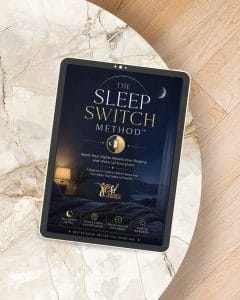
Discover THE SLEEP SWITCH METHOD™ and learn practical strategies to improve your sleep, restore your energy, and wake up ready to lead.
Your next chapter starts now. 💛
FOLLOW US ON:
Facebook
Pinterest
Instagram
LinkedIn

Plugin designed by RofiTech