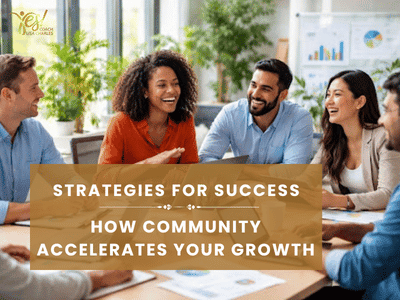
How Community Accelerates Your Growth: Strategies for Success
Introducing our New Deep Sleep Reset System in Mighty Network
✨ We are officially launching Our Brand New Mighty Networks Community!

You deserve restful sleep and restored energy. Come reset with us inside our new Mighty Network Space.
Reset your sleep with support, structure, and exclusive resources — join our New Mighty Network Space now!
No more tired mornings. No more wired nights. Let’s fix your sleep together! Join the Challenge inside the group and have the benefits of more resources to support your deep sleep.
———————————————————————————————————————————————————————————————
You gain momentum faster when people around you push, challenge, and celebrate your progress. Community gives you honest feedback, new ideas, and steady accountability so you move from plans to actions more quickly. When you tap into a strong group, you speed up learning, access opportunities, and stay motivated through the hard parts.
You will find practical ways to use community to boost skills, find partners, and keep momentum. Expect clear strategies for building supportive circles, tools that make connection easy, and simple ways to measure what’s working so you keep growing without burning out.
 Credit: Deposit Images
Key Takeaways
- Community gives you faster learning and clearer next steps.
- Small accountability groups keep you consistent and focused.
- Track a few simple metrics to know when to scale or adjust.
The Power of Community in Personal and Professional Growth
Communities give you people who share skills, hold you accountable, and step in when setbacks happen. You gain confidence, clearer goals, and practical help that speed up real change.
 Credit: Deposit Images
“When you accept the truth that underpins the lies, your acceptance creates amagical moment of possible transformation and growth.”
Lisa Charles – Commit. Do. Live.
Sense of Belonging as a Catalyst
Feeling like you belong makes you take bigger steps. When you join a group that values your ideas, you try new tasks sooner and take more risks at work or in your side projects. That happens because social acceptance reduces fear of failure and boosts your willingness to learn.
Look for communities with clear norms and regular meetings. Consistent routines (weekly check-ins, shared projects, or peer reviews) create small wins that build skill and momentum. You’ll find mentors, peers, and role models who show concrete ways to level up, not vague encouragement.
Motivation Through Shared Purpose
Shared goals sharpen your focus and raise your effort. If your group works toward the same target—launching products, getting promotions, or improving well-being—you get regular prompts to act. Those prompts include deadlines, public commitments, and feedback.
Use these features: set measurable goals with peers, track progress in a shared place, and celebrate specific milestones. That structure turns motivation from a feeling into a habit. You’ll notice productivity rise because others mirror good habits and challenge you to keep pace.
Community Support for Resilience
Support from others helps you recover faster after setbacks. When you face rejection, project failure, or burnout, a community gives emotional backing, concrete advice, and sometimes direct help like referrals or shared workload. That support lowers stress and prevents long stalls in progress.
Practical forms of support matter most: someone who reviews your pitch, gives interview practice, or offers short-term collaboration. These actions rebuild momentum quickly. Over time, consistent community support makes you more resilient: you learn from failure, adapt strategies, and keep moving toward personal and professional growth.
Accountability and Feedback Loops Within Communities
You get clearer progress when people hold each other to specific commitments, give honest suggestions, and offer practical help. That combination raises standards, shortens learning cycles, and turns advice into action.
 Credit: Deposit Images
The Role of Accountability Circles
An accountability circle is a small group that meets regularly to track goals and give real-time checks. You set measurable targets (weekly deliverables, metrics, or milestones) and report back each session. Keep groups to 4–8 people so everyone speaks and receives focused attention.
Use a shared tracking tool or simple checklist so members can see progress between meetings. Assign a rotating facilitator to keep meetings on time and to note actions. Pairing an accountability circle with a mentor boosts results: mentors model behaviors and answer specific questions while peers push you to follow through.
Expect the circle to do three things: clarify commitments, call out missed steps with respect, and help replan when challenges arise. That structure turns vague intentions into predictable habits.
Constructive Feedback for Continuous Improvement
Give feedback that links to an action. Start with one clear observation, say the impact, and offer one suggestion for next steps. For example: “Your demo ran long (observation). Attendees lost focus (impact). Try a 10-minute timebox for feature walkthroughs (suggestion).”
Establish rules so feedback stays constructive: be specific, focus on behavior not person, and suggest an experiment to try. You should practice short feedback rounds in each meeting—two minutes per person works well. Use a simple rubric (what worked, what didn’t, next step) to prevent vague praise.
Track feedback over time to form a feedback loop. You give guidance, the member adjusts, and the group measures results. That loop speeds learning and reduces repeated mistakes.
Building Reliable Support Systems
Design support systems that combine peers, mentors, and clear escalation paths. Peers offer daily motivation and quick problem-solving. Mentors provide deeper technical or strategic advice and can challenge assumptions based on experience. Define who to contact for which issue so you don’t waste time.
Document common challenges and proven responses in a shared playbook. Use scheduled office hours or a mentorship roster to guarantee access. For urgent barriers, set a rapid-response rule: three people must weigh in within 48 hours to unblock you.
Balance accountability with support: require follow-up actions after feedback and provide help to complete them. That mix of challenge and aid helps you stay committed and improve faster.
Unlocking Empowerment and Inspiration in Group Settings
Groups give you clear tools and choices: you can learn from experienced peers, gain new ideas from people unlike you, and practice skills that build confidence. Use those chances to ask for help, try small experiments, and share wins so others can copy what works.
 Credit: Deposit Images
Mentorship and Knowledge Sharing
In a group, mentorship means someone with proven experience guides your next steps. Look for mentors who set concrete goals with you, give timely feedback, and connect you to people or resources. That might mean a weekly check-in, a sample template, or an introduction to a funder or collaborator.
You benefit most when you come prepared: bring a short ask, one clear challenge, and any relevant work samples. That lets mentors give specific, usable advice instead of vague praise.
Set up simple rules: rotate who speaks, limit advice to three actionable items, and record key takeaways. These rules keep sessions efficient and let knowledge build over time. Over time, you’ll move from receiving guidance to mentoring others, which strengthens your skills and the whole community.
Inspiration From Diverse Perspectives
Diverse group members bring different problem-solving styles, life experiences, and networks. When you listen to varied viewpoints, you get new options to try rather than repeating the same failed tactics. Invite people from different fields, ages, and backgrounds to widen your idea pool.
Practice active listening: paraphrase a speaker’s point, ask one clarifying question, then suggest one small experiment. This keeps conversations focused and practical.
Use short activities to surface ideas fast—like a 5-minute lightning round or a bias-check prompt. These techniques reduce groupthink and spark fresh inspiration you can test in real life. You’ll leave meetings with concrete next steps instead of vague motivation.
Fostering Personal Development
Groups give you a safe place to practice skills you need: public speaking, negotiation, planning, and feedback. Pick one skill to work on for a month and ask the group to notice progress. Small, regular practice beats rare, big attempts.
Ask for clear, actionable feedback framed as: “One thing I did well” and “One thing to try next.” That format keeps critique useful and prevents it from feeling personal.
Track simple metrics—attendance, one learning goal per meeting, and one action taken after each session. These data points show your growth and push the group to stay accountable. As you apply feedback and try new tactics, your confidence and ability to lead within the community will grow.
Relevant reading on mentorship and community impact can help you design these practices, for example guidance on mentoring networks and community learning models.
Strategies to Grow and Sustain Your Community
Focus on a clear promise, know who benefits most, and create repeatable actions that drive participation and referral. Use direct tests—short surveys, 15-minute interviews, and simple engagement rituals—to tune value and scale what works.
 Credit: Deposit Images
Defining Your Value Proposition
Be precise about the benefit members get from joining your community. Write one sentence that says who benefits, what they gain, and why it matters. For example: “You get weekly expert answers and partner discounts that speed up your product launches.” Put that sentence on your landing page, welcome message, and event invites.
Test the line with a 3-question survey and three 10–15 minute member interviews. Track answers: do people join because of content, connections, or perks? Use those signals to tweak messaging and features. When your value proposition matches real member needs, word-of-mouth grows and the network effect begins. Repeat this test every 6 months.
Identifying and Understanding Your Target Audience
List the specific segments you want: job role, industry, location, experience level, or problem. For each segment, build a one-paragraph profile that includes their top challenge and top desired outcome. That profile guides what events, posts, and partners you prioritize.
Gather data with short surveys, behavioral analytics, and five-to-ten 20-minute interviews per segment. Ask exactly what tools they use, where they hang out online, and what would make them tell a colleague to join. Use that input to create targeted acquisition paths—email sequences, paid ads, or partner invites—that match the places your audience already visits.
Activating Community Engagement
Create low-barrier rituals that recur weekly or monthly. Examples: a Monday quick-poll, a biweekly “Show & Tell” thread, and a monthly live Q&A. Publish a simple calendar and automate reminders so members can plan to show up.
Reward micro-contributions: spotlight helpful comments in a weekly recap, add reaction leaderboards, and offer small host roles to active members. Run short A/B tests on post formats and timing to learn what sparks replies. Use surveys and pulse polls after events to measure satisfaction and surface ideas. When members see consistent value and recognition, participation climbs and your community growth becomes self-sustaining.
Relevant reading on sustainable tactics and onboarding flows can guide these steps; see practical frameworks for community building at Kannect and Circle.
Tools and Platforms that Accelerate Community Growth
Pick platforms and tactics that lower friction for members, cut customer acquisition cost, and boost daily active users (DAU). Focus on tools that fit your content types, support retention features, and make networking simple.
Choosing the Right Community Platform
Choose a platform that matches how your members want to interact.
For your ecosystem, whether it’s Story to Spine™, The Yes! Life Institute, Deep Sleep Reset System Space, or Reunite Space inside Mighty Networks, each space serves a different layer of transformation and engagement.
If you need structured learning, threaded discussions, resource libraries, and guided programs, choose an all-in-one community platform like Circle, Kajabi-style tools, or Mighty Networks to host your spaces in one ecosystem.
If real-time connection, voice interaction, and low-cost engagement matter more, platforms like Discord or Slack can support active community conversations and daily interaction.
For deeper learning environments that require searchable long-form discussions, reflection, and knowledge-building (like Story to Spine frameworks or sleep system education), a forum-style structure works best, where content can be revisited, built upon, and expanded over time.
The key is not just choosing a platform, but designing intentional spaces for transformation:
- Story to Spine™ → identity + message building
- The Yes! Life Institute → personal development + embodiment
- Deep Sleep Reset System → health + restoration habits
- Reunite Space → connection + relational healing
Each space should reflect how your members grow, engage, and evolve—not just where they “log in.”
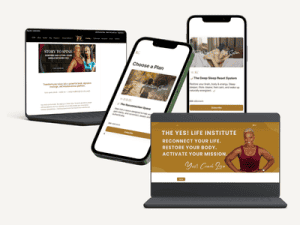 Credit: Lisa Charles Image
Compare platforms on these measurable points:
- Integrations: Does it connect to your CRM, analytics, and payment processor?
- Retention features: Does it support member tiers, badges, or progress tracking?
- Cost vs. CAC: Estimate how the platform lowers your customer acquisition cost through referrals or integrated payments.
- DAU potential: Check notification tools, mobile app quality, and ease of re-entry.
Run a two-week pilot with a small cohort. Track DAU, retention after 14 and 30 days, and support ticket volume. Use those metrics to decide before committing.
Leveraging Online and Offline Meetups
Use meetups to strengthen bonds and raise retention. Host regular online events (AMA, workshop, cohort kickoff) and schedule local in-person meetups quarterly. Online sessions scale cheaply and raise DAU through live prompts and Q&A. In-person meetups turn active members into advocates who refer others.
Tactics that work:
- Calendar integration: Sync events with Google Calendar and send reminders.
- RSVP gating: Require a small action (survey, question) to reduce no-shows.
- Follow-up flows: Send recordings, highlights, and next-step actions to increase return visits.
- Local chapters: Seed city leads and give them a simple checklist to run meetups.
Measure success by tracking event attendance, post-event DAU lift, referral sign-ups, and retention of attendees vs non-attendees.
The Impact of Networking Opportunities
Networking opportunities turn casual members into long-term contributors. Create structured ways for members to meet: mentorship pairings, speed networking, and interest-based channels. These formats help members find value quickly and lower churn.
Design networking for outcomes:
- Outcome-first matching: Match based on goals, not just titles.
- Time-boxed formats: Short sessions with clear next steps increase participation.
- Visibility for connectors: Highlight active networkers with badges to encourage more introductions.
Track outcomes like new collaborations, referral conversions, and reduced customer acquisition cost from member-led sign-ups. Strong networking increases perceived value and raises member retention, which directly improves lifetime value.
Measuring and Optimizing Community Success
Track a small set of clear metrics, use fast feedback loops, and turn data into actions that grow membership and keep people coming back.
 Credit: Deposit Images
Tracking Engagement and Retention
Measure daily active users (DAU) and weekly active users to spot real activity shifts. Track the percentage of members who post, comment, or react each week, and compare that to total membership to find your true engagement rate.
Use a short list of KPIs:
- DAU / MAU ratio
- New member activation within first 7 days
- 30‑ and 90‑day retention rates
- Average sessions per member per week
Set a baseline, then run small experiments: tweak onboarding messages, add a clear call to action in the welcome flow, or test pinned starter threads. Measure each change over 2–4 weeks. If retention rises, scale the change. If engagement drops, roll back and try a different CTA. Record what worked in a simple dashboard you review weekly.
Continuous Value Creation for Members
Focus on actions that make members feel the community helps them achieve a goal. Track problem resolution rate: percent of questions that receive an accepted or helpful answer within 48 hours. Track resource downloads and member‑generated content as signals of value.
Create recurring value with repeatable formats:
- Weekly expert Q&A or office hours
- Member spotlights that model contribution
- Resource libraries with versioning and usage stats
Prompt members with clear CTAs: ask a question, share a tip, or join a weekly thread. Reward helpful contributors with badges or public recognition to reinforce behavior. Keep feedback channels open—short pulse surveys after events or automated post‑onboarding checklists—to learn what members need next and to guide product and content priorities.
Frequently Asked Questions
These answers show clear, practical ways community speeds your growth. Expect specific gains, actions you can take, and signs to watch for as you join and participate.
What specific benefits do you gain from joining a strong community?
You gain faster skill improvement through shared resources, templates, and repeatable processes. Communities often offer workshops, curated tool lists, and accountability systems that cut learning time.
You also gain access to real opportunities. Members share job leads, project collaborations, and referrals that move your career or business forward more quickly.
How does peer feedback improve your skills and decision-making over time?
Peer feedback exposes blind spots you miss working alone. Regular, concrete critiques help you correct errors and refine approaches before small problems become big ones.
Feedback also helps you test ideas quickly. You learn which choices work in practice, not just in theory, so you make better decisions faster.
What role do mentors and experienced members play in speeding up progress?
Mentors show proven shortcuts based on real experience. They point you to the most effective methods and warn you about common pitfalls.
Experienced members also model the behaviors that lead to success. Watching their workflow, communication, and decision habits helps you adopt effective routines sooner.
How can accountability partners and group check-ins increase consistency and follow-through?
Accountability partners hold you to specific commitments and deadlines. Saying your goal aloud to others makes you more likely to act and follow through.
Group check-ins create a steady rhythm for progress. Weekly or biweekly reviews reduce procrastination and help you spot when to adjust plans.
Which community activities most effectively build real-world experience and confidence?
Project-based collaborations teach practical skills under real conditions. Build-a-project sprints, peer code reviews, or joint client work force you to apply knowledge.
Public showcases and feedback sessions build confidence. Presenting work to a group and receiving structured feedback helps you iterate faster and speak clearly about your results.
How do you choose the right community to match your goals, level, and learning style?
Pick communities that match your current goals and timeframe. Look for groups with members at your skill level and some who are ahead, plus clear paths for progression.
Check for active formats that fit your style: if you learn by doing, find project-focused pods; if you prefer discussion, choose critique or study groups. Ask about meeting cadence, mentorship availability, and examples of member outcomes before joining.
What if the very thing stalling your business…
is the story you haven’t fully owned yet?
We explored how hesitation, lack of clarity, and misalignment can quietly limit your impact. One of the most overlooked risks? Not fully stepping into your voice, your message, and your lived experience as a leader.
That’s where “Story to Spine” comes in.

This coach-led experience is designed to help you extract the truth from your life story and transform it into a mission-led book and keynote, without staring at a blank page.
Because this isn’t just about writing. It’s about unlocking clarity, confidence, and direction so you can lead, speak, and grow your business from a place of deep alignment.
Your story isn’t a side note; it’s your leadership advantage.
Your story is already the spine. Let’s find it.
If you’re ready to move beyond the risks and lead with clarity, you can learn more and apply for the Premier Program Pilot this April by filling out the form below.
Ready to invest in yourself and finally take control of your health, mindset, and daily habits?
My collection of eBooks is designed to guide you step-by-step toward a stronger, more confident, and energized version of YOU. Whether you’re starting fresh or leveling up your routine, these resources are practical, empowering, and created to fit real life—not perfection.
Don’t just wish for change, take action today. Explore the full collection and find the guide that speaks to your goals.
👉 Start your transformation here: https://yescoachlisa.com/product-category/e-books/
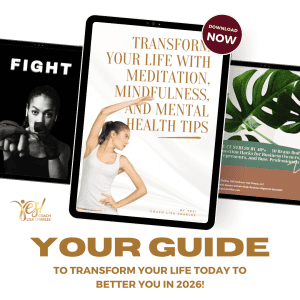
Your next chapter starts now. 💛
FOLLOW US ON:
Facebook
Pinterest
Instagram
LinkedIn

Plugin designed by RofiTech